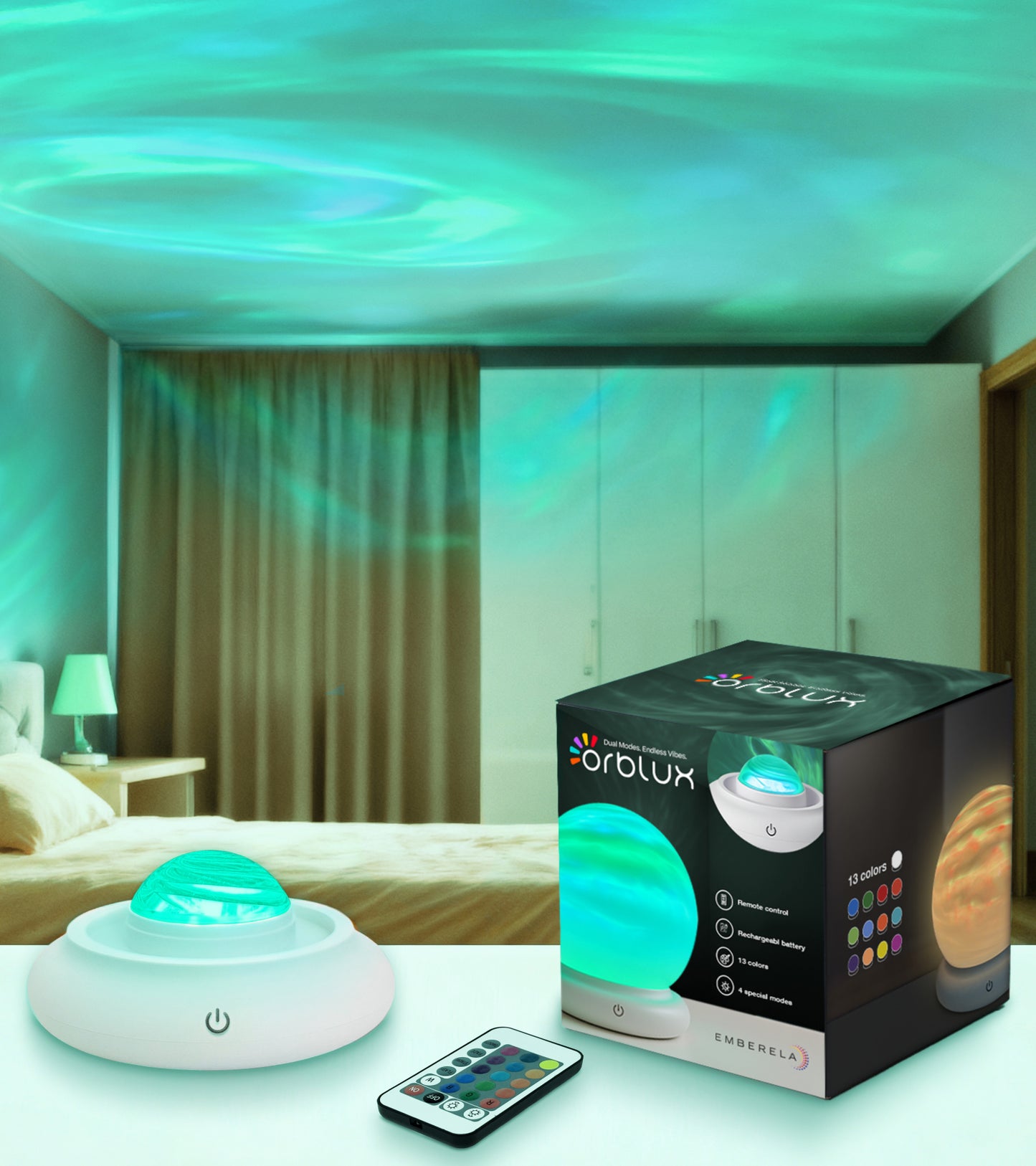

The lights that actually help most autistic kids wind down share three traits: flicker-free, dimmable, and warm or muted in color (think soft ambers, dusty blues, and low-saturation greens rather than stark white or neon).
Calming lights for autism work best when the child (not a fixed program) controls the brightness and color, since sensory needs are personal, not universal.
Why Lighting Isn't Just Background Noise for an Autistic Kid
If you've ever watched a kid go from fine to overwhelmed the second a fluorescent light kicks on, you already know: lighting isn't decor. It's input.
For many autistic children, the visual system processes light with more intensity than a neurotypical brain does; a flicker most people can't consciously see, a color temperature that reads as "harsh" instead of "bright," a room that's technically well-lit but somehow still feels like too much.
That's the whole idea behind sensory lights for autism. Done right, they're not a gimmick or a trend; they're one of the more evidence-backed tools for helping a nervous system come back down from overstimulation. Done wrong (wrong color, no dimmer, cheap flicker-prone bulbs), they can make a meltdown worse, not better.
This guide covers what the research and occupational therapists actually recommend, the mistakes to avoid, and how to set up a calming corner that fits a real kid, not a Pinterest board.
What's Actually Happening in the Brain During Sensory Overload
When sensory input piles up faster than the brain can sort it, the amygdala; the brain's threat-detection center, treats it like a real emergency. Stress hormones spike, the body shifts into fight-or-flight, and rational thinking takes a back seat.
That's a meltdown, physiologically speaking, and lighting is one of the few environmental triggers a parent or teacher can actually control in the moment.
This is why occupational therapists so often reach for sensory room lighting as a first intervention rather than a last resort.
A room with soft, steady, adjustable light gives an overloaded nervous system less to fight against, which is a big part of why sensory rooms are now standard equipment in autism therapy centers and increasingly common in bedrooms at home.
Color and Calm: What the Research Actually Says
Color isn't just aesthetic here; it's functional. Muted, low-saturation tones like soft blue, sage green, and dusty pink tend to read as calming, while saturated reds, hot pinks, and stark whites can tip toward overstimulating for a light-sensitive kid.
Warmer color temperatures; roughly in the 2200K–3000K range, similar to a sunset, are generally more soothing than cool, blue-heavy white light, which some autistic individuals find genuinely overwhelming.

None of this is one-size-fits-all, though. Some sensory-seeking kids actually respond well to color-shifting patterns and movement, while sensory-avoidant kids want the opposite: one steady, muted tone and nothing else moving. The only way to know is to let the kid try a few settings and watch (or ask) what actually helps.
The One Non-Negotiable: Skip the Flicker
Here's the detail that gets missed constantly: flicker matters more than color. Cheap LEDs and old fluorescent tubes flicker at a rate many neurotypical adults can't consciously perceive; but plenty of autistic kids can, and it shows up as eye strain, headaches, and a baseline hum of anxiety they may not have words for. Look for lights explicitly labeled flicker-free, and steer clear of fluorescent tubes entirely. This one swap alone solves more sensory-lighting complaints than any amount of color theory.
Dimmability is the second must-have. A light that can only be "on" or "off" forces an all-or-nothing environment. A light that ramps gradually gives a kid or a parent the ability to ease into or out of a space instead of hitting it with full brightness at 7am.
Building a Sensory Corner Without Overthinking It
You don't need a converted spare room to make this work (though if you're building one out, these sensory room ideas are a solid starting point). A single corner with the right light does most of the work:
- Pick one adjustable light source with dimming and warm-to-cool color range, rather than several competing light sources in different tones.
- Keep it low and indirect where possible; light bouncing off a wall or ceiling reads as softer than a direct bulb at eye level.
- Let the kid control it. A remote or app-controlled light hands over agency, which matters as much as the light itself.
- Anchor it to a routine; the same lighting cue before bed or after school starts to signal "this is wind-down time" on its own.
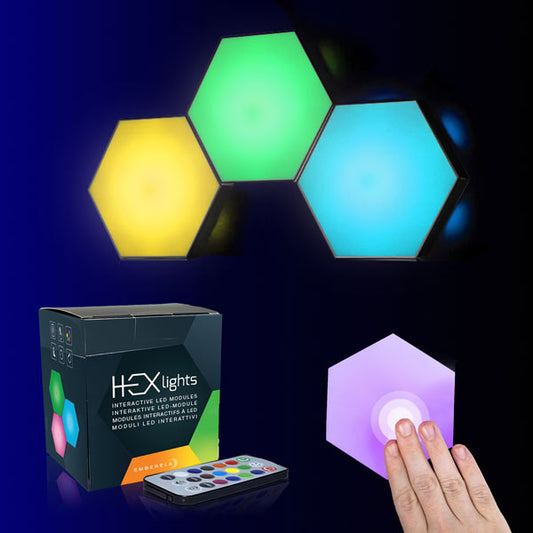
If you're mounting anything; strip lights, a color-changing panel, a projector, How to Put LED Lights on the Wall, walks through it without any drilling drama. For a setup that's built specifically to be dimmable, flicker-free, and color-adjustable from a remote or app, shop Emberela HEXlights; they're designed to be tuned to whatever tone actually calms a specific kid down, not a factory-default "mood."
Make the Space Feel Like Theirs, Not a Clinical Setup
A calming corner works better when it doesn't feel like an intervention; it should feel like their room. Letting a kid personalize the space around the lighting, even with something as small as a set of wall stickers, reinforces that this is their spot, not a designated "calm down zone" imposed on them.
Pix Boy Stickers (Set of 10) and Pix Girl Stickers (Set of 10) are an easy way to let a kid stamp some identity onto the wall next to the light setup, without adding visual clutter or competing brightness.
Mistakes That Undo an Otherwise Good Setup
- Going straight to "fun" colors without testing. Neon and rainbow-cycling looks great in a product photo and can be genuinely overstimulating for a sensory-avoidant kid.
- Skipping the dimmer to save money. An on/off-only light removes the single most useful feature for wind-down use.
- Ignoring flicker because it "looks fine." If the light isn't explicitly flicker-free, assume it flickers.
- Treating every autistic kid the same. Sensory profiles vary a lot; what calms one child can genuinely agitate another. Test, watch, and adjust rather than copying someone else's setup wholesale.
- Making the space feel like a "therapy corner." Kids tend to actually use spaces that feel like their own room, not a clinical add-on.
We don't just sell lights; we build lighting that adapts to whoever's in the room, kid or gamer or anyone in between. A calming corner should feel like theirs, not a clinical checklist. Glow-up the wind-down, too.